Criminal Law
Attorney Morgan Leigh provides timely insights, updates, and analysis on criminal defense law in Washington, D.C. and Maryland. It covers recent legal developments, court decisions, and policy changes that impact the rights and freedoms of individuals facing criminal charges. The goal is to inform, empower, and educate readers about their legal options, while offering practical guidance on navigating the complexities of the criminal justice system in D.C. and Maryland.
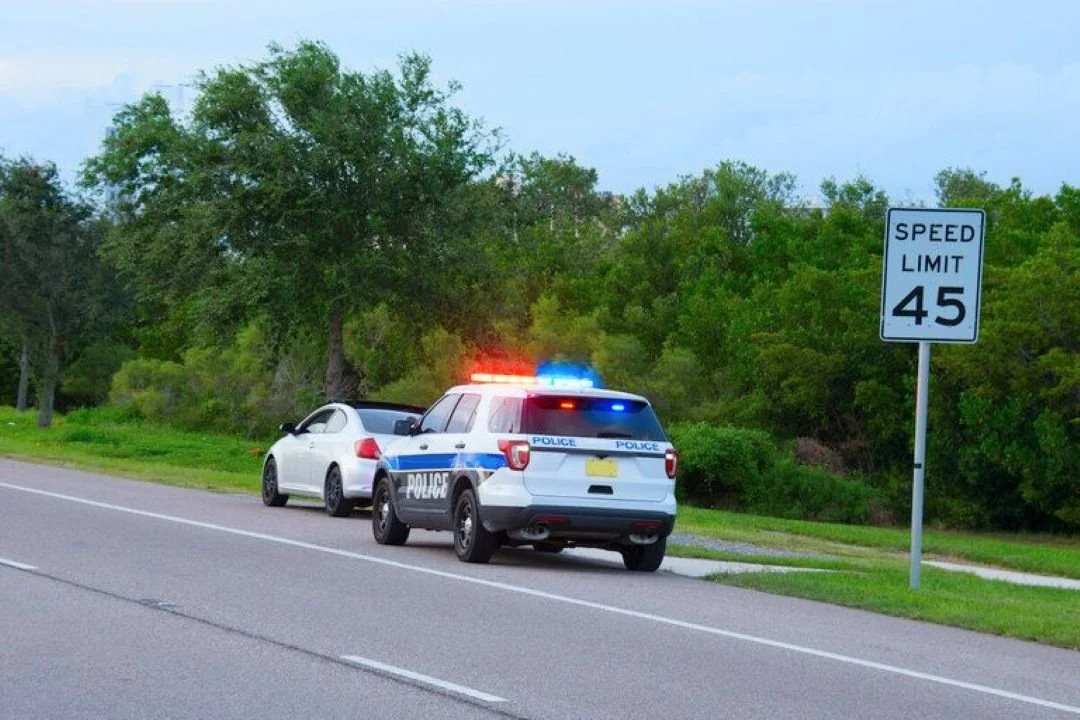
On October 1, 2025, Maryland’s “Sergeant Patrick Kepp Act” took effect, reshaping the state’s treatment of reckless, negligent, and aggressive driving. The biggest headline: reckless driving is now a jailable offense and includes a bright-line speed threshold. These changes are codified in amendments to Md. Transp. § 21-901.1, alongside related updates to the point system and aggressive-driving provisions.
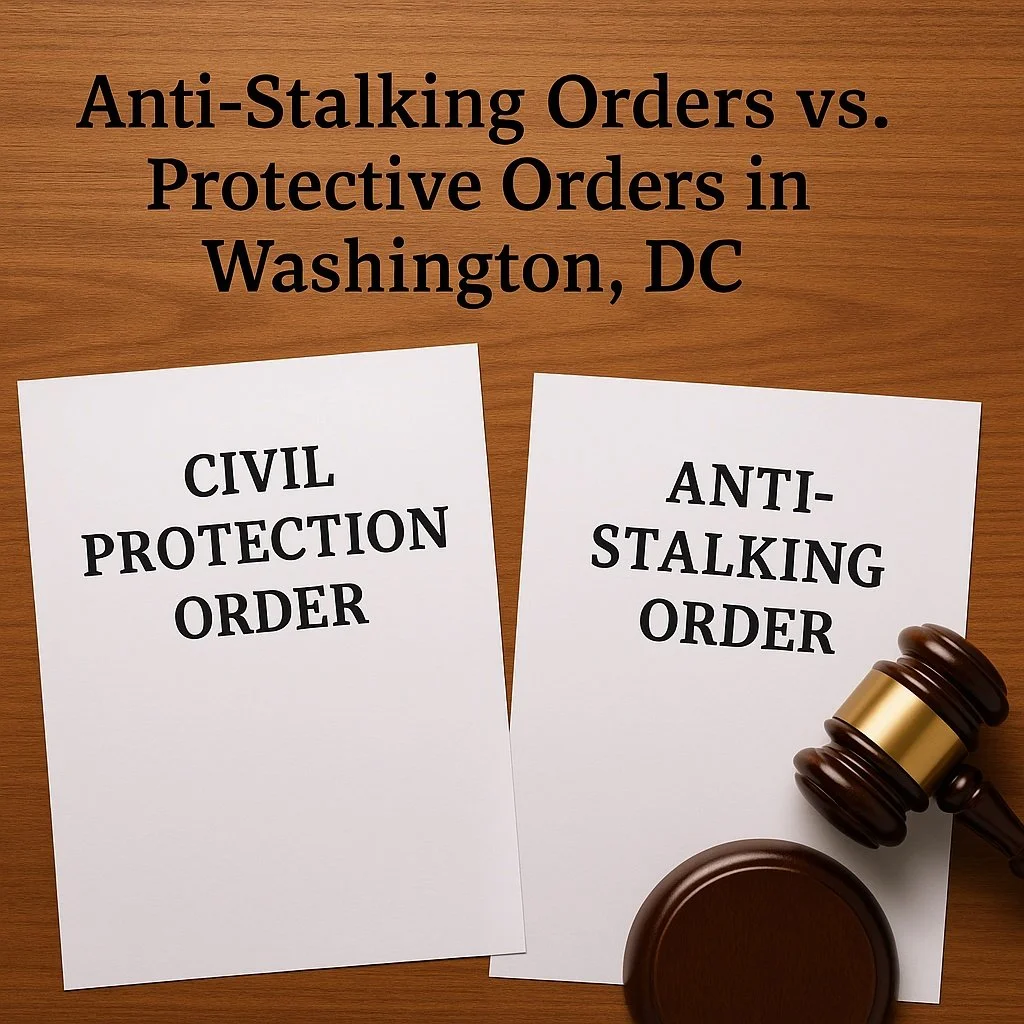
The difference between a civil protection order (CPO) and an anti-stalking order (ASO) in DC is based upon the relationship between the parties. Both offer relief from threatening, harassing, and stalking behavior, but a civil protection order can be issued on a wider array of conduct than an anti-stalking order. In this blog, I discuss the differences between a CPO and an ASO.
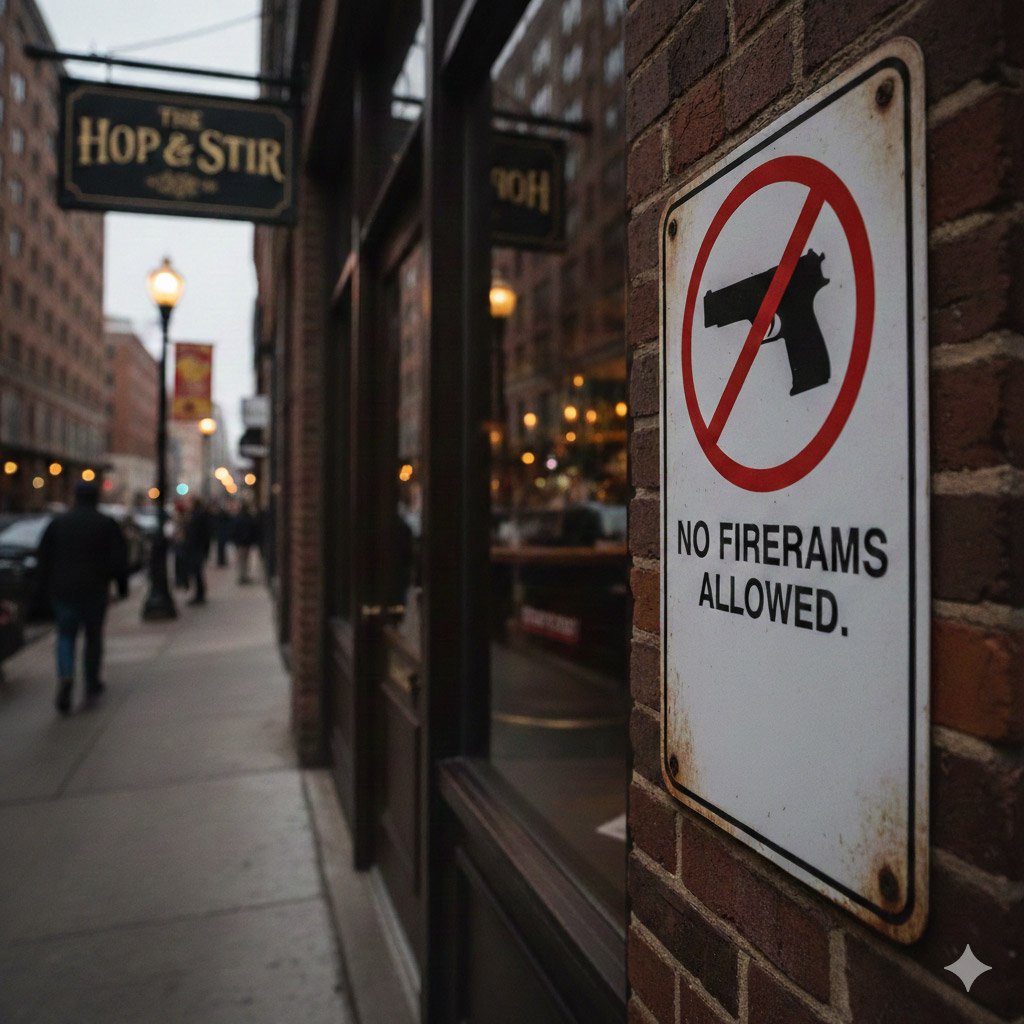
In a major decision further limiting firearm eligibility in the District, the DC Court of Appeals ruled in District of Columbia Metropolitan Police Department v. Paul Porter, that a person who received a probation before judgment (PBJ) in Maryland and subsequently expunged the case, could still be considered "convicted" under District law — and therefore disqualified from registering a firearm.
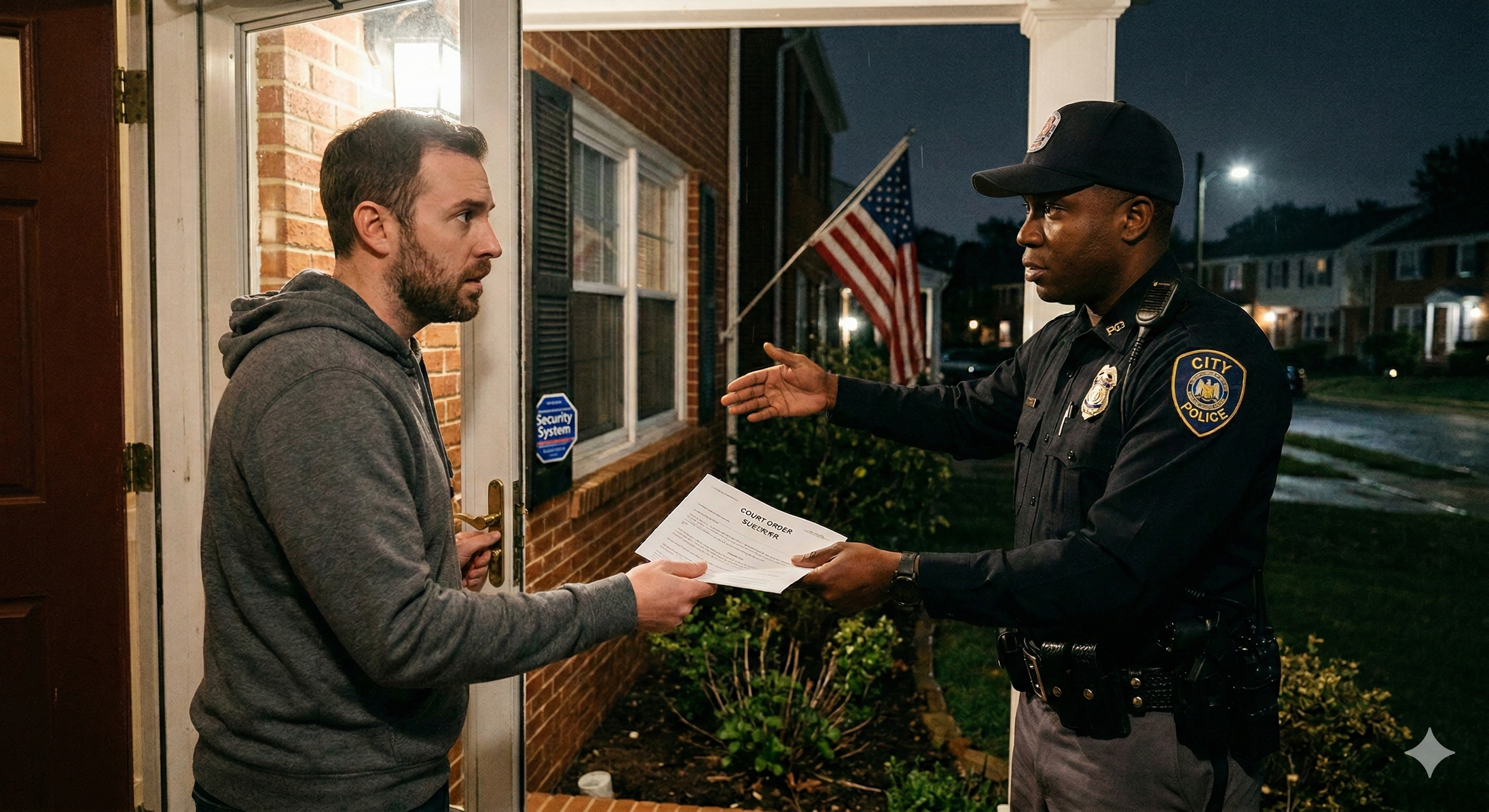
Often, the most difficult aspects of a criminal conviction are the long-lasting collateral consequences that follow a person long after the sentence has been completed and the debt to society has been repaid. On July 13, 2025, the Maryland Supreme Court took a step in the right direction to ensure that individuals who were not properly advised by their attorneys of their right to request a sentence modification within five years can petition the court to review the case. This blog discusses the change in the law and who is eligible to petition the court for a belated sentence modification, which can include striking and vacating the conviction altogether.
In a major decision further limiting firearm eligibility in the District, the DC Court of Appeals ruled in District of Columbia Metropolitan Police Department v. Paul Porter, that a person who received a probation before judgment (PBJ) in Maryland and subsequently expunged the case, could still be considered "convicted" under District law — and therefore disqualified from registering a firearm.
The DC Second Chance Amendment Act expands opportunities for individuals with criminal records to have their records sealed or expunged, allowing them to rebuild their lives without the burden of past mistakes…